
Laleh Sherkat: Photographing Iran, 1984 - 1993 “The Morgue Workers” (1994)
Courtesy of Laleh Sherkat
In the Morgue Workers series Laleh captures the Muslim ritual cleansing of the body of the deceased before burial, known as Ghusl Mayyit. Men wash male bodies, and women wash female bodies. In Iran, this ritual is often carried out by professional body washers, observed by relatives. Despite the sacristy of the ritual, the workers have a very low status in Iran.
Laleh was commissioned by ZANAN (Women) magazine to photograph the morgue. The photographs focus on the women workers and the care and dignity they show each body.
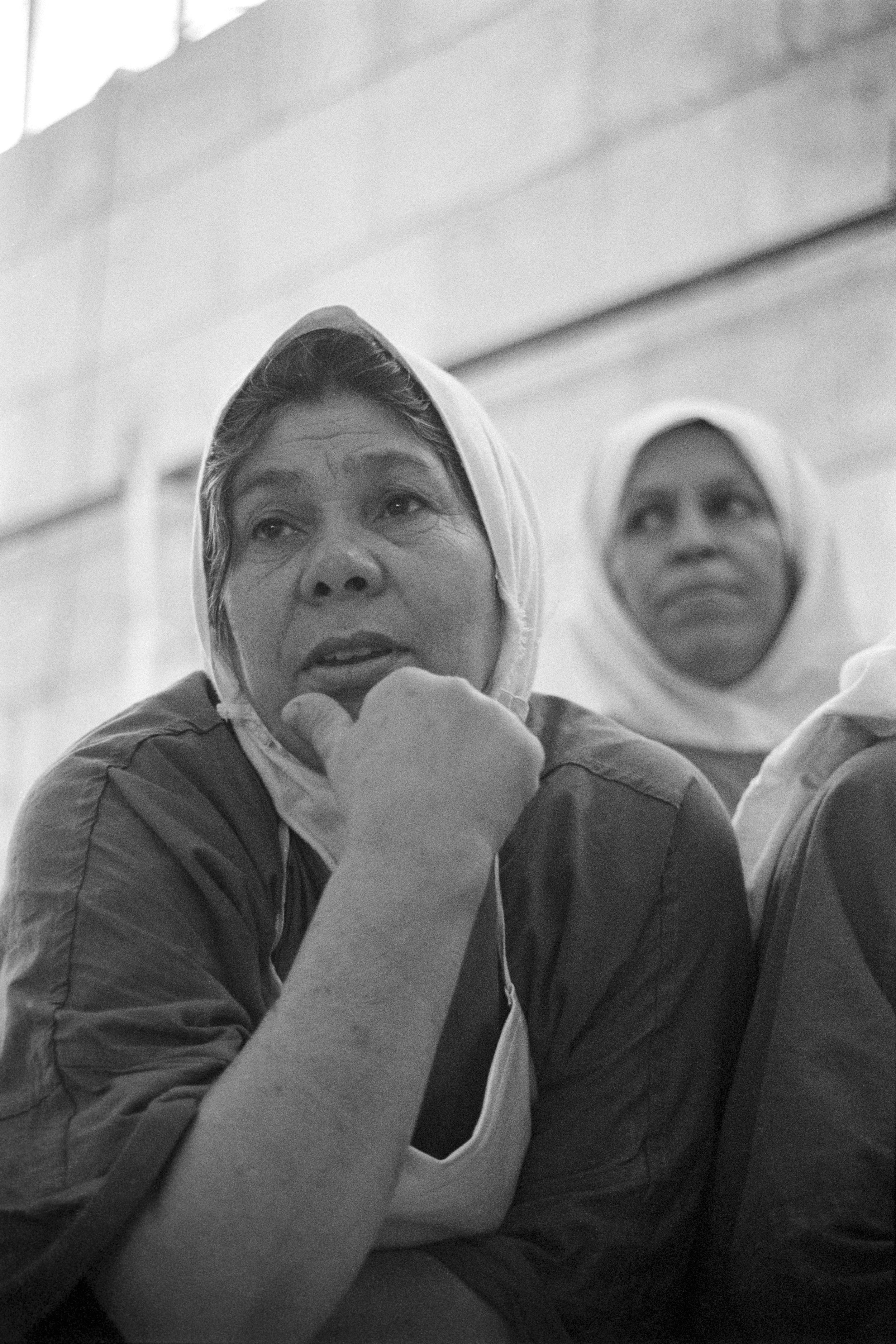
Black-and-white portrait photograph of a close-up of two women morgue workers. Both women wear dark clothing, white aprons, and white headdresses. The woman in the foreground leans slightly forward, resting her chin on one hand while mid-sentence, her expression engaged and thoughtful. She is the focal point of the image. Behind her, another woman stands slightly out of focus, looking off to the left with a calm expression. The background features tiled or stone walls.
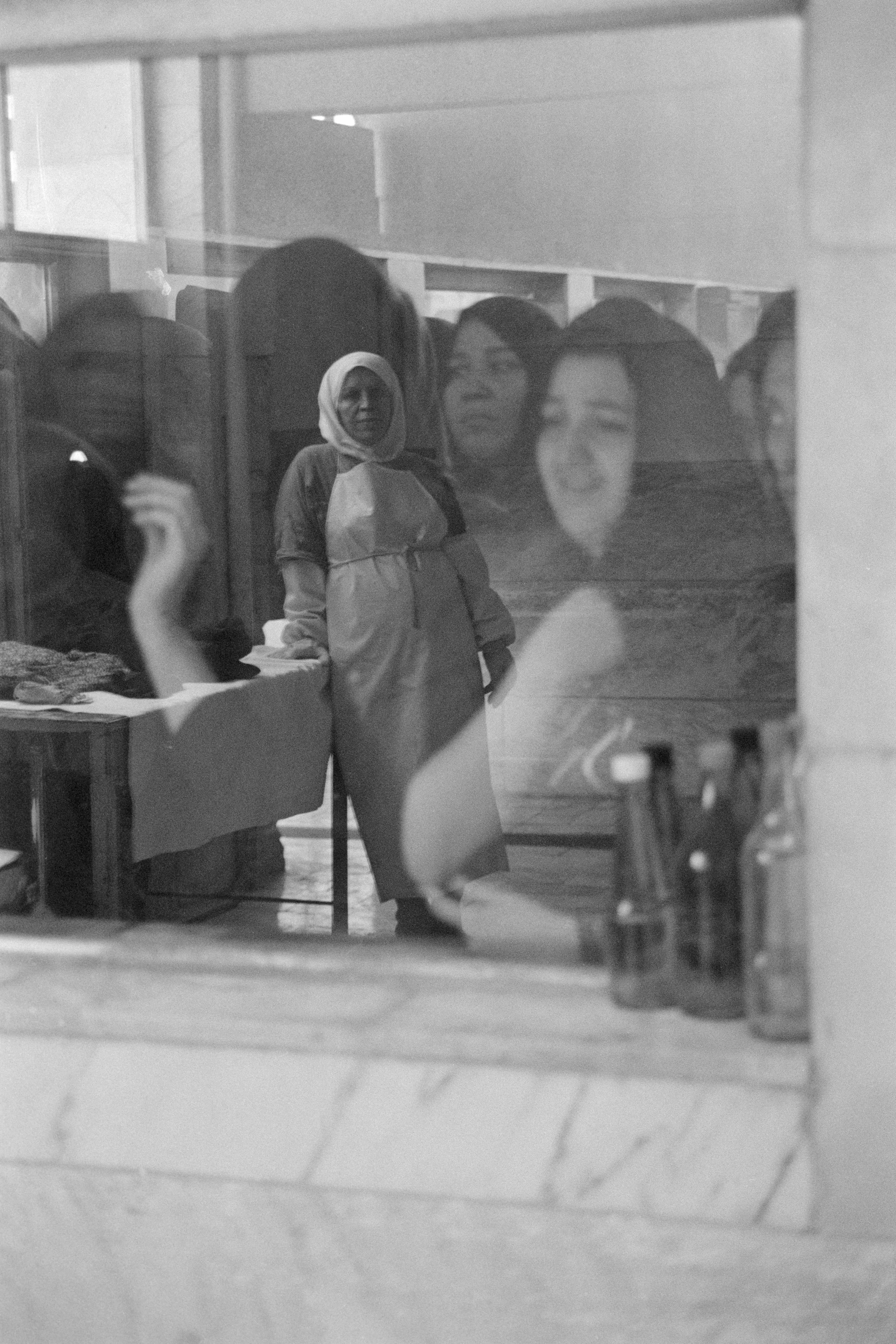
Black-and-white portrait photograph of a reflective scene through a morgue window. On one side of the glass, a group of women in dark clothing and black headdresses gather, their faces partially visible as they peer through the window. On the other side of the window, made visible through the reflection of the glass, stands a female morgue worker dressed in a white apron, sleeves, and headdress. She leans slightly against a table scattered with garments and equipment. The layered composition blends viewers and the subject in a single, contemplative frame.
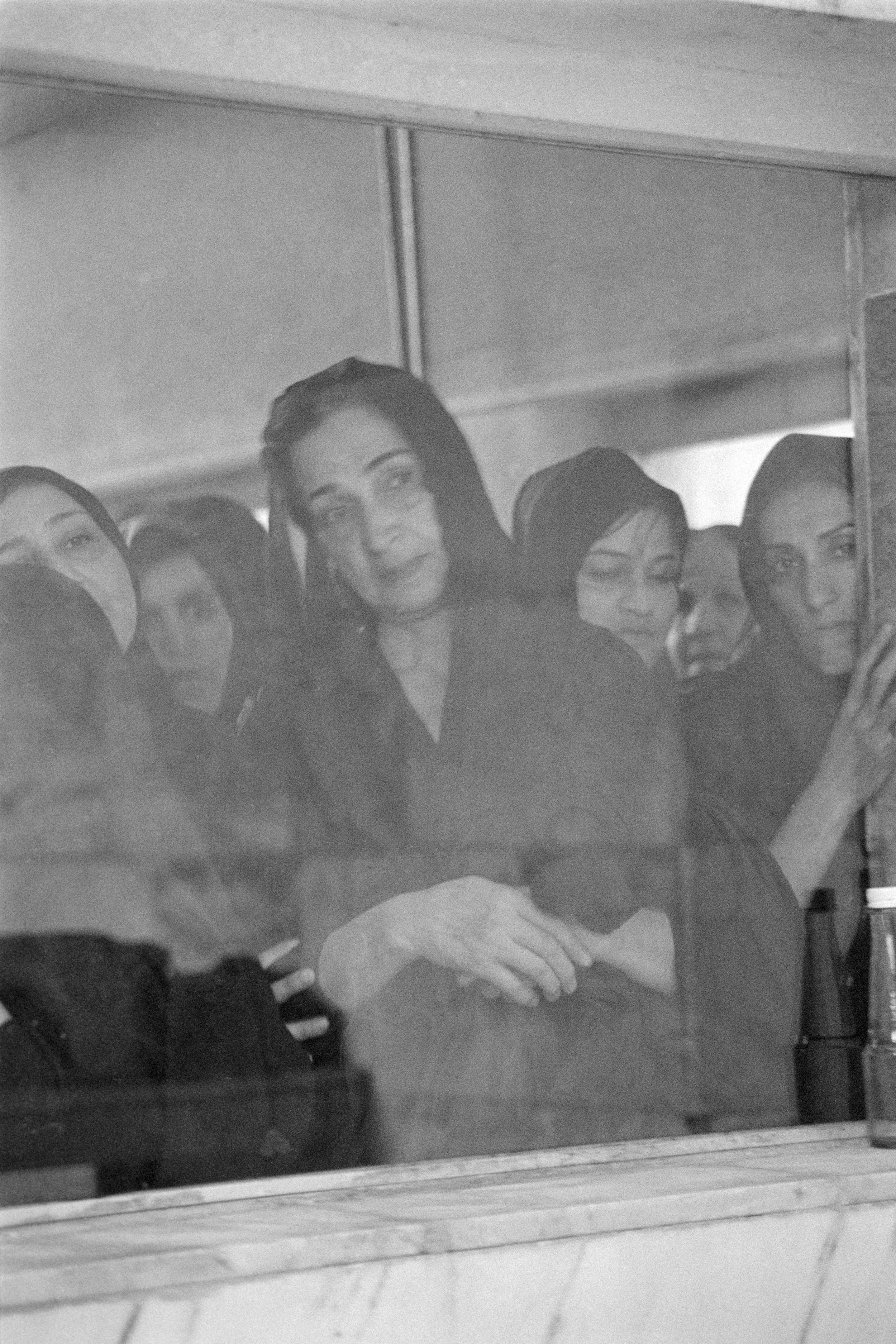
Black-and-white portrait photograph showing a group of women gathered at a morgue window. The women, dressed in dark clothing and black headscarves, are seen closely pressed together, their faces visible through the glass. Most gaze inward with solemn expressions, while some appear to be leaning on the window frame.
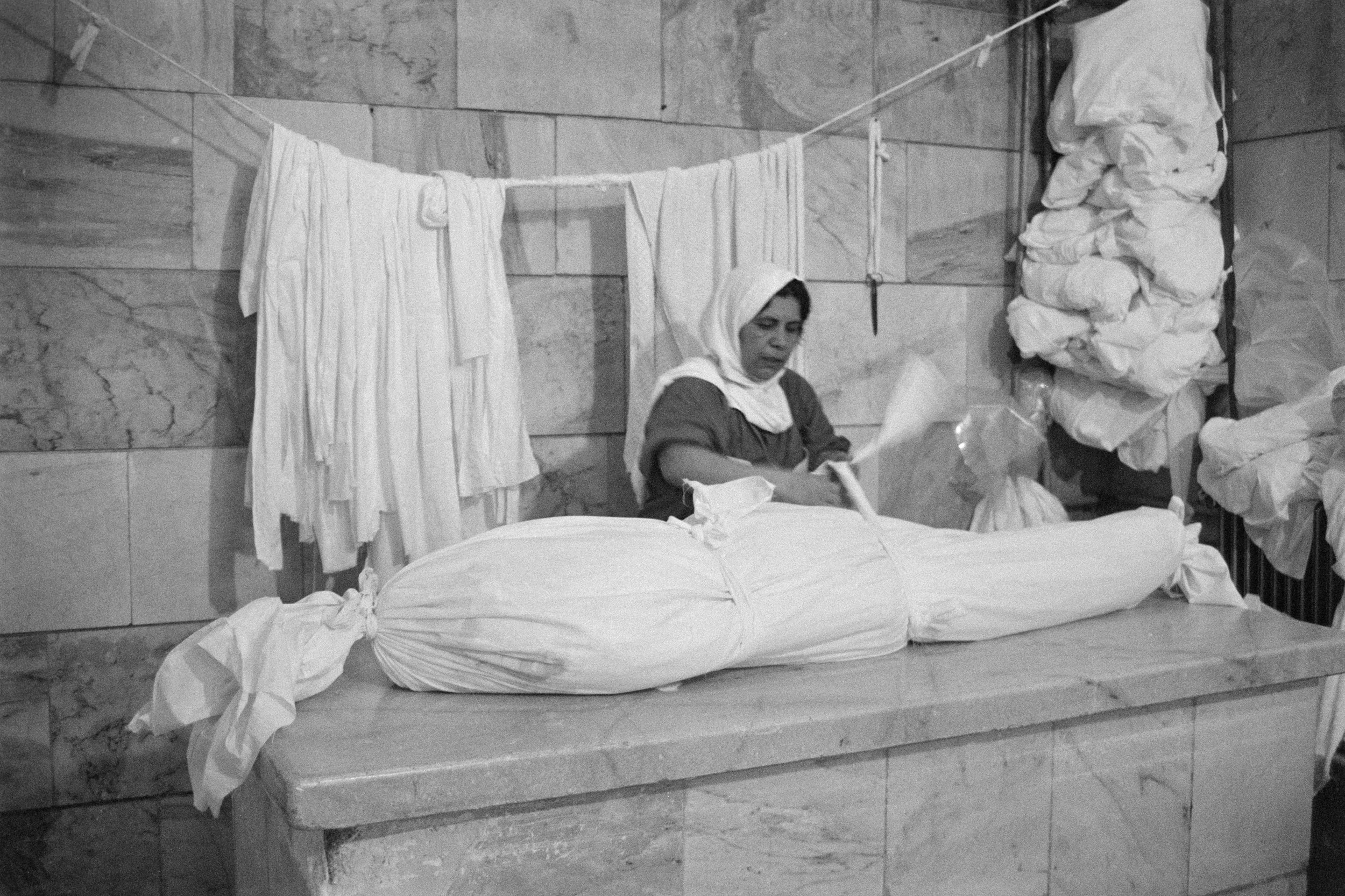
Black-and-white landscape photograph of a morgue worker preparing a body. The woman stands at a marble slab table, wrapping a body in white cloth with deliberate care. She wears a white headscarf and apron, focused on her task. Behind her, white fabric hangs from a line strung across tiled walls while additional bundles of cloth are stacked in the corner of the room.
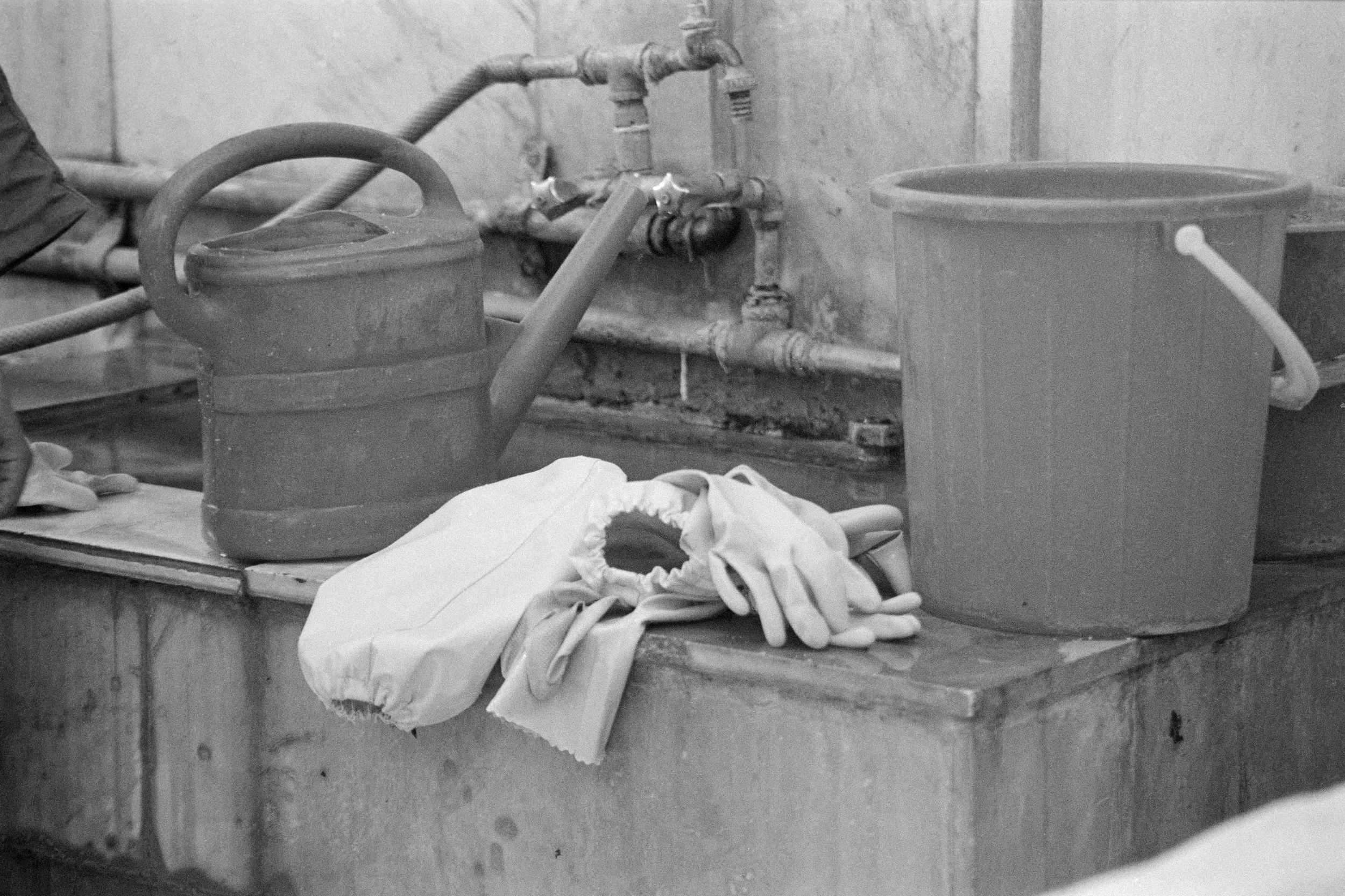
Black-and-white landscape still life photograph of an industrial sink in a morgue. The image shows a concrete basin along a tiled wall, with pipes and faucets running along the back wall. Cleaning tools are spread across the sink’s surface. On the right sit two plastic buckets, while a large watering can is positioned to the left. At the center, a pair of white gloves— belonging to morgue workers—rests neatly on a folded cloth.

Black-and-white landscape photograph of morgue workers in the process of preparing a body. The body, fully wrapped in white cloth, lies atop a patterned carpet in the center of the frame. Two morgue workers, dressed in white aprons, gloves, and headdresses, stand with their backs to the camera as they tend to the body. To the left, another woman prepares a large bath, putting on gloves in anticipation of the task. In the background, there are drying lines draped with white fabric and additional piles of cloth stacked on nearby surfaces.
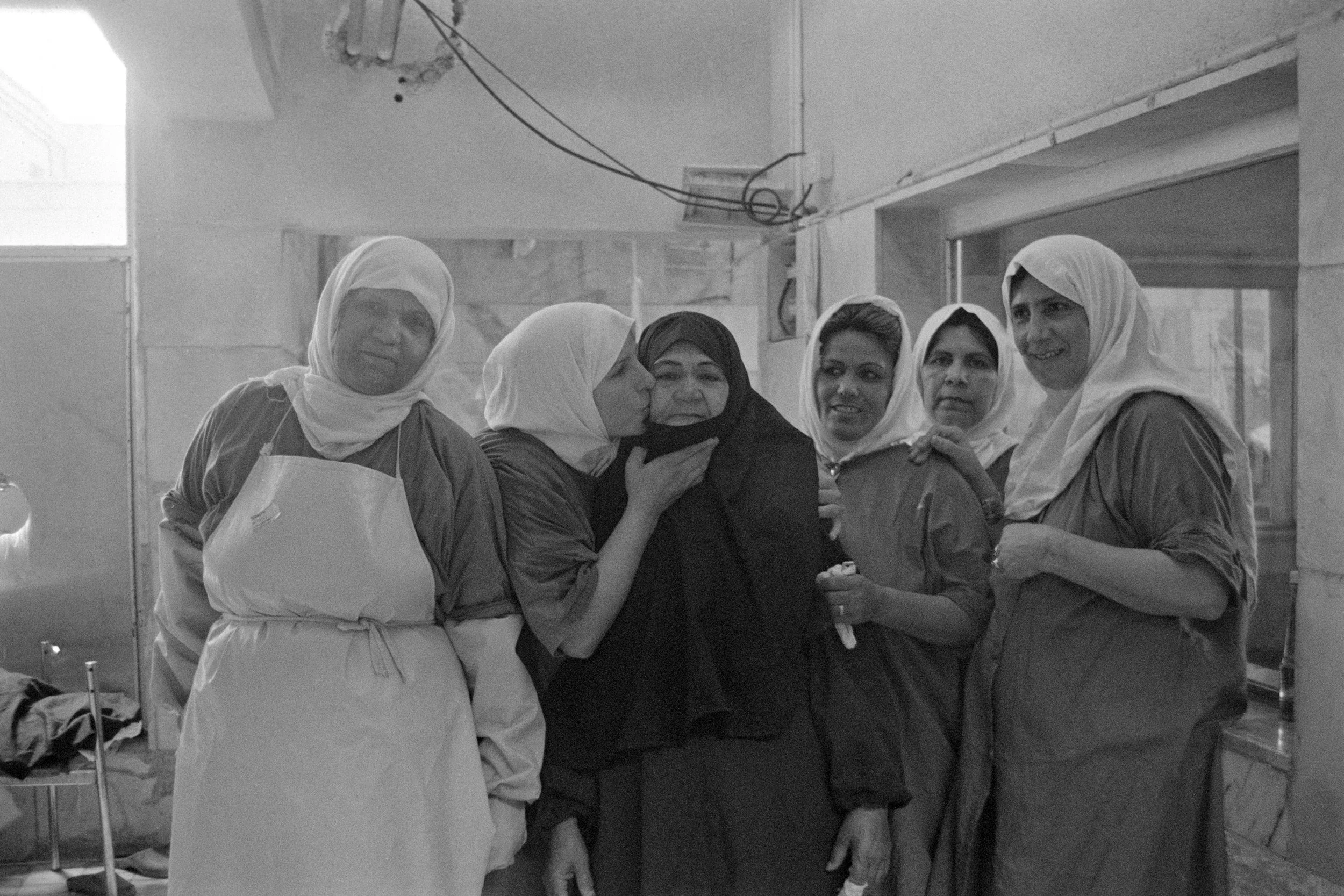
A black-and-white landscape group photograph featuring Laleh Sherkat and a group of morgue workers. The image captures a candid moment inside a tiled workspace. The morgue workers are dressed in uniform: dark dresses paired with white headdresses. Standing on the far left, one worker also wears a long white apron and gloves. At the center of the group stands Laleh Sherkat, dressed entirely in black. She is affectionately kissed on the cheek by one of the workers beside her. The women smile and pose for the photograph together.
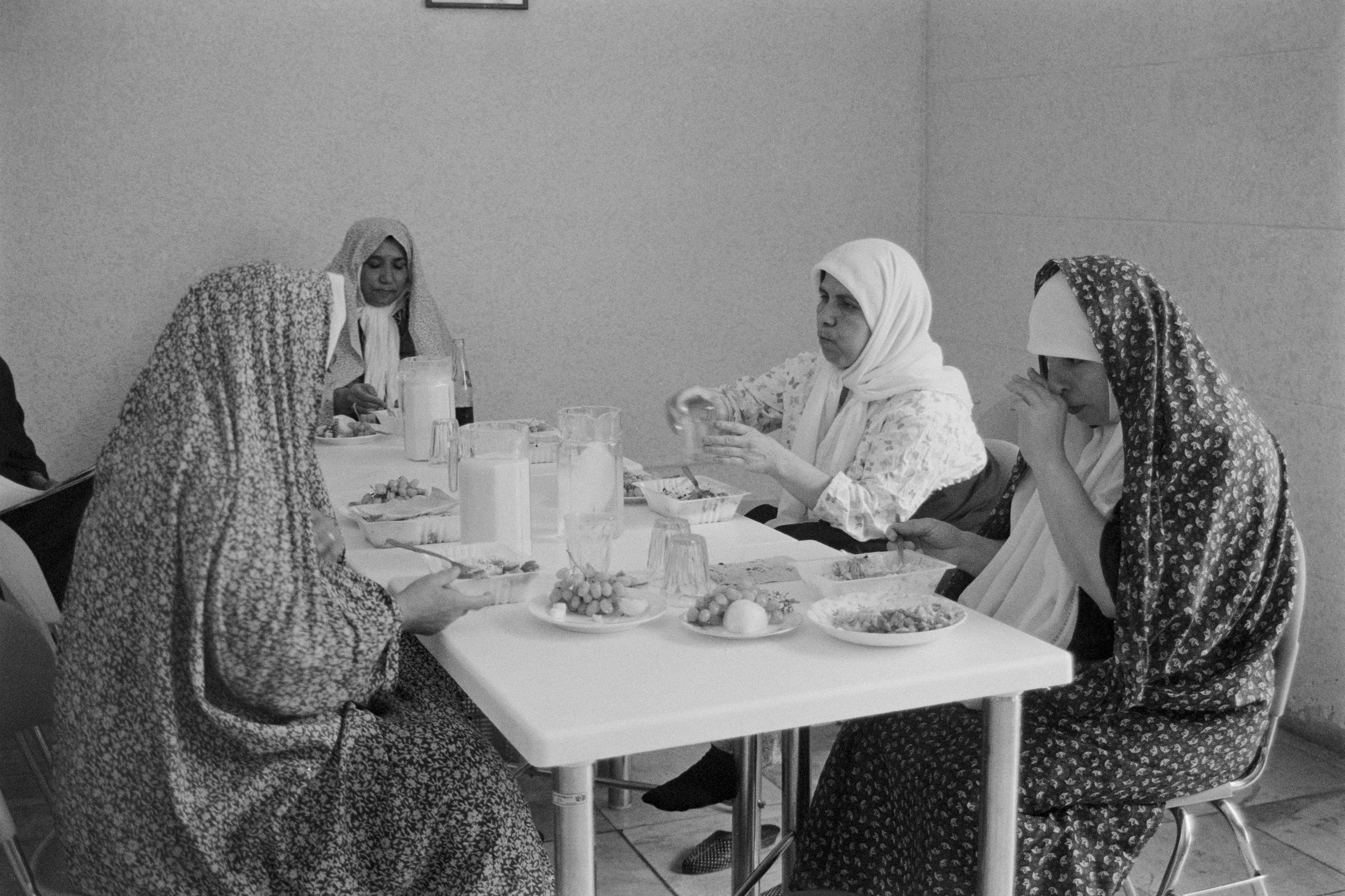
Black-and-white landscape photograph of morgue workers during their lunch break. Four women are seated around a white rectangular table, sharing a quiet moment away from their duties. Out of uniform, they wear patterned dresses along with their white headdresses. Plates of food, milk pitchers, glasses, and bottles are arranged neatly across the table. The women appear engaged in casual conversation or focused on their meals. The plain walls and tiled floor suggest a modest break room setting, offering a glimpse into the workers’ daily lives beyond their professional roles.
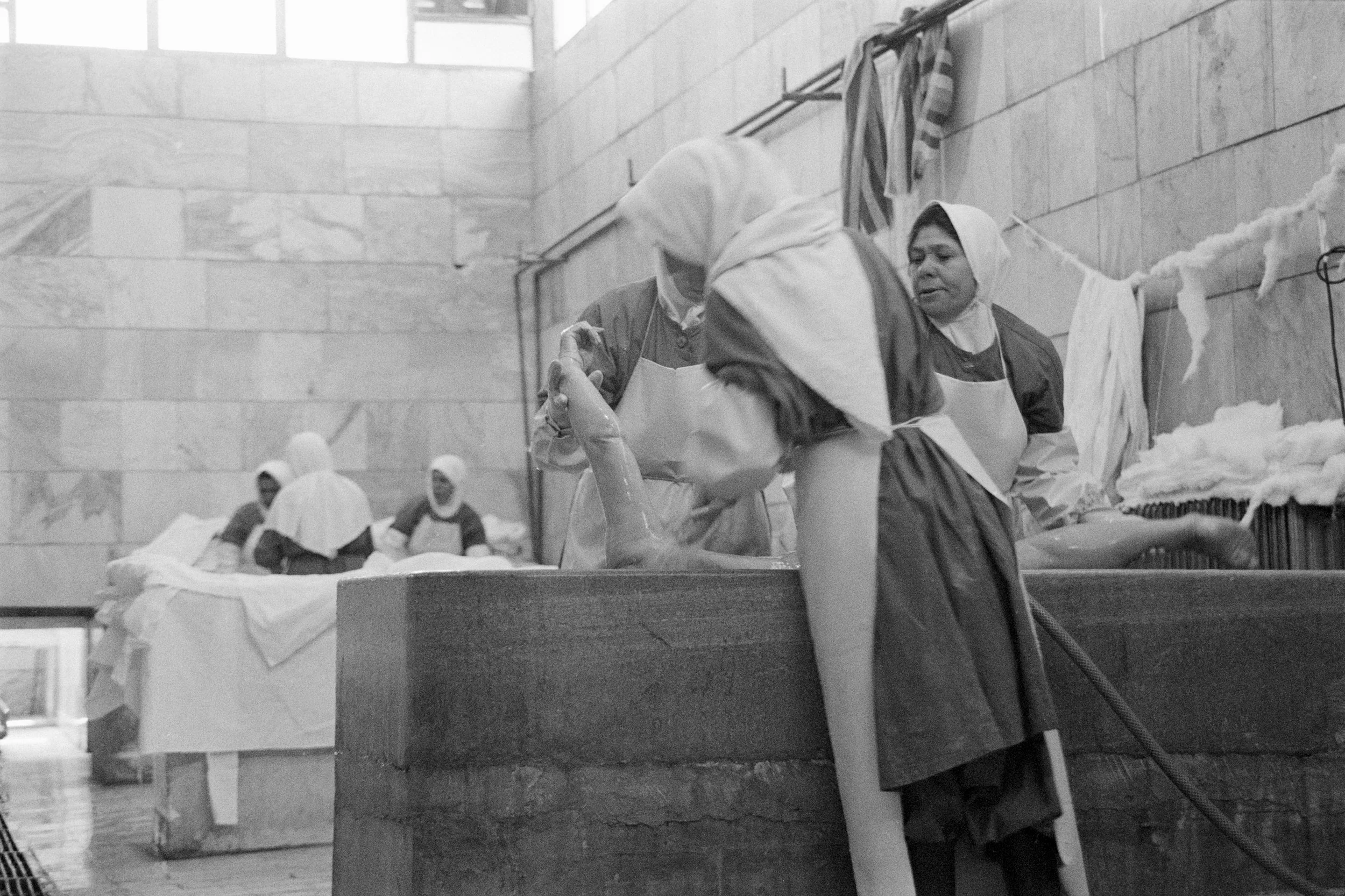
Black-and-white landscape photograph of morgue workers in the process of cleaning and preparing bodies. In the foreground, three women in uniforms and white headdresses work over a large water basin. One lifts an arm of the deceased while another rinses it with a hose. In the background, three additional workers carefully dry and wrap another body in white cloth. The setting is a large, tiled room with white piping running across the back wall and lines of white fabric hanging above the work areas. The composition captures the methodical, collaborative nature of the workers' tasks.
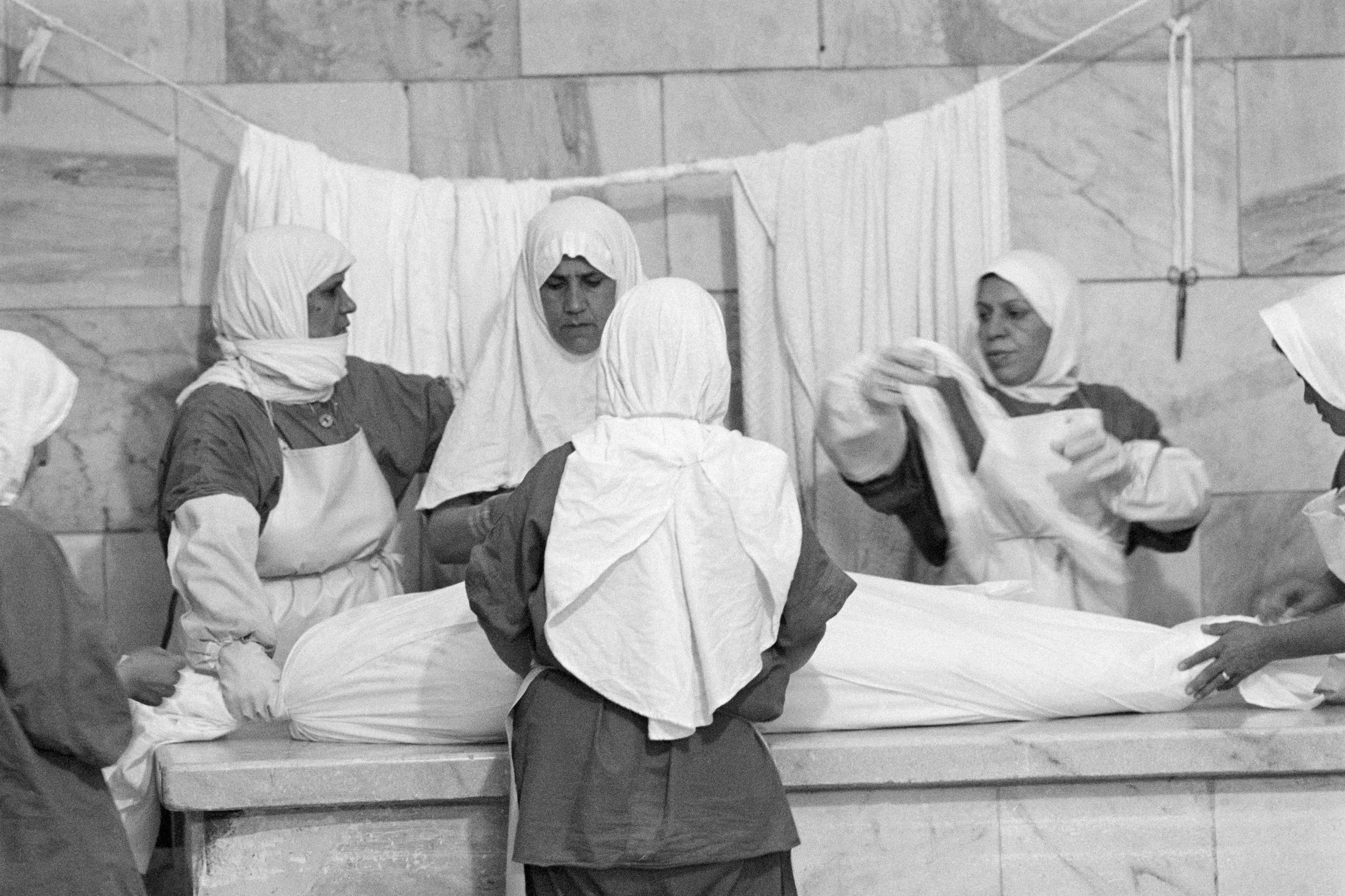
Black-and-white landscape photograph of morgue workers preparing a body. Six women, dressed in uniform dark clothes, white headscarves, white aprons, and white gloves, surround a large marble slab table. They carefully and meticulously wrap the body laid out before them in white cloth. Each woman is engaged in a specific task, suggesting a practiced, coordinated process. Behind them, a tiled wall forms a clean, orderly backdrop, with white fabric draped over a line running across the space. The scene conveys both the precision and care involved in their work.

Black-and-white landscape photograph of morgue workers taking a break. Six women dressed in their uniforms, grey attire, and white headdresses are posing on one side of the tiled room. Two women sit on the edge of a large marble slab table while another leans casually against it; all three face the camera with relaxed expressions. To the left, three other women are either moving toward a doorway or looking away, disengaged from the group. White cloth hangs from lines stretched across the background, and the overall scene captures a quiet moment of pause in the workspace.
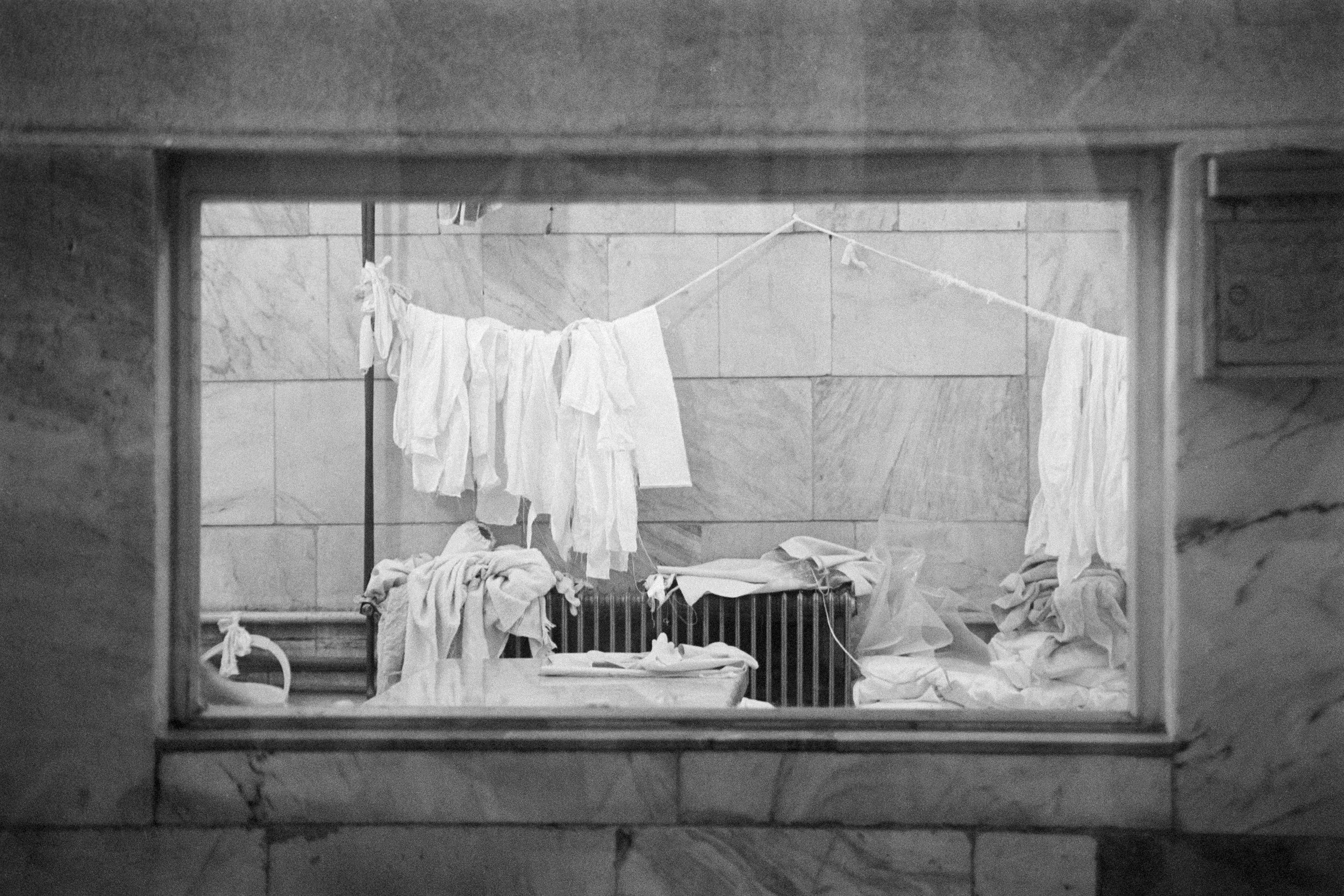
Black-and-white landscape photograph of a view through a morgue window into the preparation room. The window frames an unoccupied workspace, revealing marble slab tables and large water basins used in body preparation. The space appears still and quiet, with white cloths hanging from lines and tiles, while additional fabric lies in disordered piles on surfaces throughout the room. The tiled walls and clinical setting underscore the room’s function. The absence of workers lends a sense of pause, allowing focus on the tools and textures of the environment itself.